
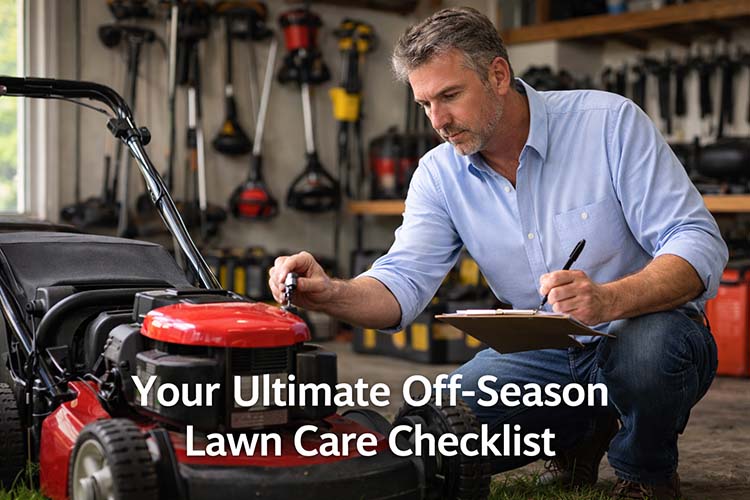
Most lawn care companies scramble when the busy season ends. Missed equipment checks, forgotten employee training, and last-minute budget surprises slow down your start next year. This off-season lawn care checklist breaks down every step, from fleet care to marketing updates, so your team stays organized and ready. Keep reading to get a printable guide that turns chaos into smooth planning. Check out this seasonal checklist for landscaping for additional tips.
Equipment & Fleet Maintenance
The quiet months give you time to catch up on equipment care that gets pushed aside during busy seasons. Smart lawn care pros know that winter work on mowers and trimmers saves thousands in emergency repairs come spring.
Essential Off-Season Tune-Ups
Your equipment takes a beating all season. Now’s the time to give it the attention it deserves. Start with your mowers, they’re the backbone of your business. Clean or replace air filters, check and gap spark plugs, and sharpen those blades. Dull blades tear grass instead of cutting it cleanly, which stresses lawns and creates an unprofessional look.
Don’t stop at mowers. Edgers, trimmers, and blowers need love too. Drain old fuel from small engines or add stabilizer if you plan to store them with gas. Most equipment problems come from fuel sitting too long and gumming up carburetors.
The pros at Cole Landscaping recommend a thorough fall maintenance checklist that includes cleaning all equipment before storage. They suggest washing dirt from undercarriages and removing grass clippings that trap moisture and cause rust. This simple step adds years to your equipment’s life.
Small investments now prevent big headaches later. Replace worn belts, cables, and pulleys before they fail on a job site. Your future self will thank you when the busy season starts without a single breakdown.
Inventory and Parts Check
Nothing kills productivity faster than running out of parts mid-season. Take stock of what you have and what you’ll need. Count everything—from trimmer line and air filters to oil and belts. Many suppliers offer off-season discounts, so buying now can cut costs by 10-20%.
Create a simple spreadsheet to track your inventory. List each piece of equipment, its maintenance history, and parts it typically needs. This system flags when machines approach the end of their useful life and helps you budget for replacements.
Look at your repair history from last season. Did certain machines break down more often? Were specific parts constantly needing replacement? This data tells you where to focus your maintenance efforts or which equipment might need retirement.
Smart lawn care owners keep a “critical spares” box with the most common breakdown parts. Having these on hand means you fix problems in minutes instead of losing days waiting for deliveries. As LawnStarter points out in their maintenance guide, planning ahead prevents the mad rush when spring arrives.
Employee Training & Certifications

The slow months create perfect training time. Your team can build skills without the pressure of packed schedules. Companies that train during downtime start the season with sharper, more confident crews.
Developing Lawn Care Expertise
Your team members need more than just equipment skills; they need plant and soil knowledge too. Schedule regular training sessions on lawn diseases, weed identification, and proper fertilization. When employees understand the “why” behind their work, they make better decisions in the field.
Consider bringing in local extension agents for workshops. They offer free or low-cost training on regional plant issues and often provide materials you can use year-round. These experts love sharing knowledge and can boost your team’s confidence with scientific backing.
Online courses work well for self-paced learning. Many state universities offer digital certifications in turf management or pest control. These programs let employees learn during weather delays or slow periods without disrupting work schedules.
Create a skills matrix for your team. List each person and their abilities, from equipment operation to customer service. This visual tool shows you where training gaps exist and helps employees see growth opportunities. The pros at Joist emphasize training as a key part of any landscaping checklist, noting that it builds both skills and team loyalty.
Ensuring Safety Standards
Safety training isn’t just about avoiding accidents. It’s about building a culture where everyone watches out for each other. Start with the basics: proper lifting techniques, equipment handling, and first aid. Then move to job-specific hazards like power line awareness and chemical handling.
Document all training with sign-in sheets and quick quizzes. This paperwork protects your business if accidents happen and shows employees you take their safety seriously. Many insurance companies offer discounts for businesses with documented safety programs.
Inspect all personal protective equipment (PPE) during the off-season. Replace worn gloves, cracked safety glasses, and damaged ear protection. Make sure every truck has a fully stocked first aid kit and that employees know how to use it.
Create safety incentives that reward accident-free periods. Simple recognition programs where teams celebrate safety milestones build positive habits. Even small rewards like gift cards or team lunches reinforce that you value their wellbeing above production speed.
Customer Communication Prep
The quiet season gives you time to plan how you’ll talk to customers all year. Smart communication keeps clients loyal and makes your job easier when work picks up again.
Crafting Seasonal Landscaping Tips
Your customers look to you as the lawn expert. Sharing useful tips positions you as their trusted advisor. Create a calendar of seasonal advice, spring weed prevention, summer watering guides, fall cleanup tips, and winter prep checklists. These resources keep you top-of-mind even in months when you’re not on their property.
Write these tips in plain language. Avoid technical terms unless you explain them clearly. Remember that most homeowners want simple, actionable advice they can follow without special knowledge or tools.
Package your tips in different formats to reach all types of customers. Some prefer email newsletters, while others respond better to social media posts or printed door hangers. The key is making information easy to find and simple to use.
Test your advice on non-experts before sharing it widely. What seems obvious to you might confuse customers. Ask friends or family members to read your tips and point out anything that’s unclear. This simple check prevents confusion and builds trust in your expertise.
Building Stronger Client Relationships
The off-season is perfect for strengthening customer connections without the pressure of daily service calls. Start by reviewing client notes from last season. Which customers had concerns? Who requested special services? This review helps you prepare personalized approaches for the coming year.
Send thank-you notes to your best customers. A simple card expressing gratitude for their business stands out in a digital world. Include a small token like a garden center gift card for your top clients. The return on this small investment comes through years of loyalty.
Plan your communication calendar for the entire year. Map out when you’ll send service reminders, seasonal tips, and holiday greetings. This organized approach prevents the “out of sight, out of mind” problem that causes customer drift during quiet months.
Create a system for collecting and acting on feedback. Simple surveys asking “How can we serve you better next season?” give customers a voice and provide valuable insights. The most successful lawn care companies make improvements based directly on customer suggestions, creating true partnerships instead of just service transactions.